

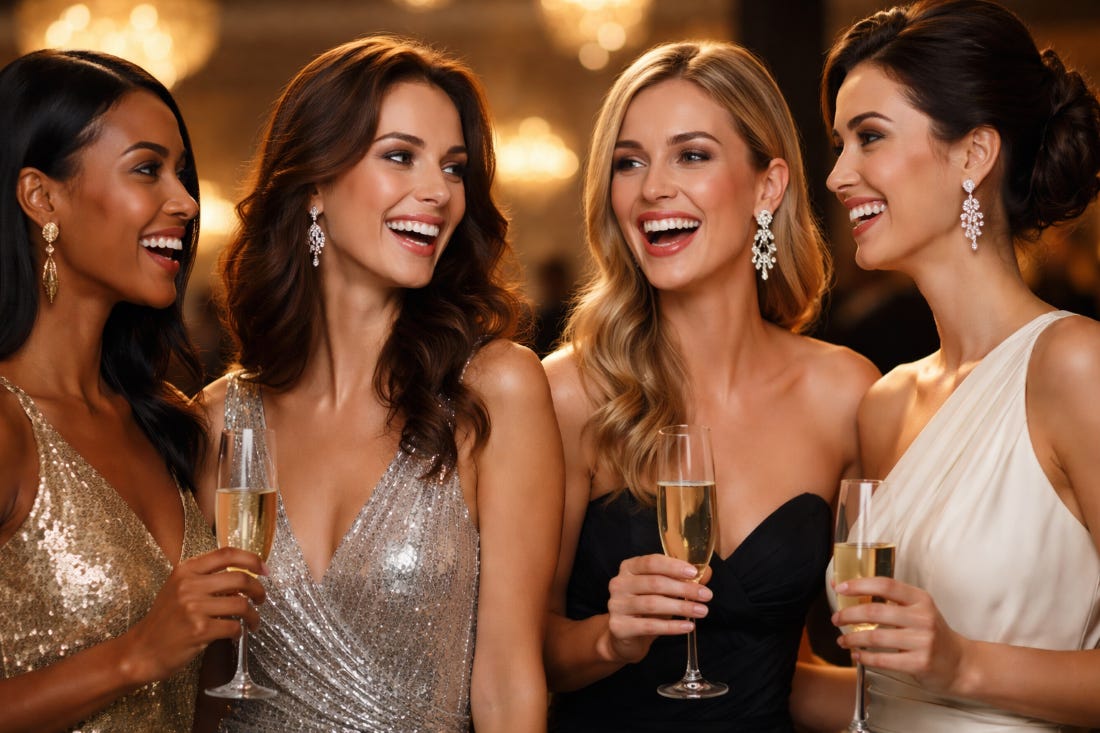
Gala dress codes are meant to guide, not intimidate. Once you know how to read them, choosing what to wear becomes less about guessing and more about enjoying the process. This guide is here to help you feel confident, comfortable, and appropriately dressed so you can focus on the evening itself.
Below is a clear, practical breakdown of the most common gala dress codes, along with gentle guidance on how to interpret them.
White Tie
What it signals:
The most formal dress code you’ll encounter.
For women, this usually means:
A full-length evening gown
Elevated fabrics like silk, satin, velvet, or chiffon
Formal jewelry and polished accessories
Hair styled intentionally rather than casually
Helpful note:
White tie is rare and very traditional. When in doubt, err on the side of formality. This is an evening where elegance is fully embraced.
White Tie — in practice
Think museum galas, diplomatic events, or legacy institutions. The room is full of floor-length gowns, structured silhouettes, and fabrics that move when you walk. Jewelry is refined rather than flashy. Hair is styled with intention, often swept up or softly sculpted. No one looks casual, and no one looks experimental. The overall feeling is ceremonial and graceful. I seldom get an invitation to white tie events, and I am more likely to rent something special because I’ll feel more thoughtful about the event.
Black Tie
What it signals:
Formal, but with room for personal style.
For women, this usually means:
A full-length gown or an elegant formal dress
Refined accessories and evening shoes
Hair and makeup that feel finished and intentional
Helpful note:
Black tie allows for personality. Color, texture, and silhouette are all welcome as long as the overall look feels elevated.
Black Tie — in practice
This is where most traditional charity galas live. You’ll see long gowns in deep colors, some sparkle, some clean and architectural. A few women may wear elevated midis, but they are clearly evening dresses. Heels are polished, clutches are small, and makeup reads as evening without being theatrical. The room feels glamorous but not stiff. I love black tie, and I own gowns in black and blue. But depending on the event I might rent a monochrome gown in burgundy or dark green.
Black Tie Optional
What it signals:
Formal, but flexible.
For women, this usually means:
A long gown, a formal midi dress, or a polished cocktail dress
Dressy fabrics and thoughtful styling
Accessories that lift the look into evening territory
Helpful note:
If you enjoy dressing up, treat this like black tie. If you prefer simplicity, a beautifully styled shorter dress works just as well.
Black Tie Optional — in practice
In the same room, you’ll notice range. Some women are in full-length gowns, others in beautifully tailored cocktail dresses with strong accessories. Everything still reads “evening,” but there’s more variety in silhouette and color. If you stand next to someone in a gown, you won’t feel underdressed in a refined shorter dress, and vice versa. I usually treat black tie optional as black tie, and wear a gown. I do that partly because I love gowns, and partly because I know I won’t be underdressed and can forget about that when I walk in the room. But here, I might wear a lighter weight gown, maybe a pattern (I always like flowered patterns) but not anything look-at-me bold.
Formal or Evening Attire
What it signals:
Elegant without strict rules.
For women, this usually means:
A cocktail dress, midi dress, or gown
Elevated but comfortable footwear
Accessories that feel intentional, not excessive
Helpful note:
This dress code is about balance. Aim for polished and graceful rather than overdone.
Formal or Evening Attire — in practice
This often appears at benefit dinners or city galas that skew social rather than ceremonial. You’ll see midi dresses, elegant jumpsuits, and the occasional gown. Shoes are dressy but practical. The mood is polished and comfortable, like everyone knows they belong there and doesn’t need to prove it. And that’s true for me. I own a number of midi-length slip dresses that can go from work (with a jacket or sweater) to dinner/party afterwards. I love these events because I have a lot of flexibility in how and when to get ready.
Cocktail Attire
What it signals:
Social, celebratory, and stylish.
For women, this usually means:
A knee-length or midi cocktail dress
Dressy flats or heels
Playful but refined accessories
Helpful note:
Cocktail attire is often the most fun. It’s a chance to show your personality while still honoring the occasion.
Cocktail Attire — in practice
This is a lively room. Dresses hit around the knee or mid-calf, fabrics have texture or color, and accessories carry personality. You’ll see statement earrings, bold shoes, and more playful styling. It still feels intentional, but lighter and more relaxed than formal evenings. Here I bring out the sparkle (metallics, sequins) and often wear knee length or shorter dresses
Creative, Festive, or Themed Attire
What it signals:
A touch of imagination is welcome.
For women, this usually means:
Following the spirit of the theme without going literal
Using color, texture, or accessories to nod to the concept
Keeping the base look elegant and wearable
Helpful note:
Think interpretation, not costume. A subtle reference always feels more elevated.
Creative or Themed — in practice
The best looks nod to the theme without shouting it. You might see a shared color palette across the room, an interesting sleeve shape repeated, or a specific texture showing up in different ways. The women who look most at ease are the ones who interpreted the theme rather than literalized it. Honestly, this is not my favorite dress code. In my experience it means the organizers couldn’t agree on a dress code, so whatever. I tend to stay dressier at these events, and if it’s a “Blue Jeans Gala” no, I don’t wear blue jeans. There is absolutely nothing wrong with dressing elevate if it makes you feel good. And I have never been unhappy with what I wore to a creative or themed event.
When the Dress Code Feels Vague
If the invitation feels unclear:
Look at the venue
Consider the host or organization
Think about the time of day
When still unsure, choosing something slightly more formal is almost always the safer and more comfortable choice. That has always worked for me.
The Most Important Rule
The right outfit is one that allows you to:
move easily
feel confident
stay present throughout the evening
When you feel at ease in what you’re wearing, everything else flows more naturally.